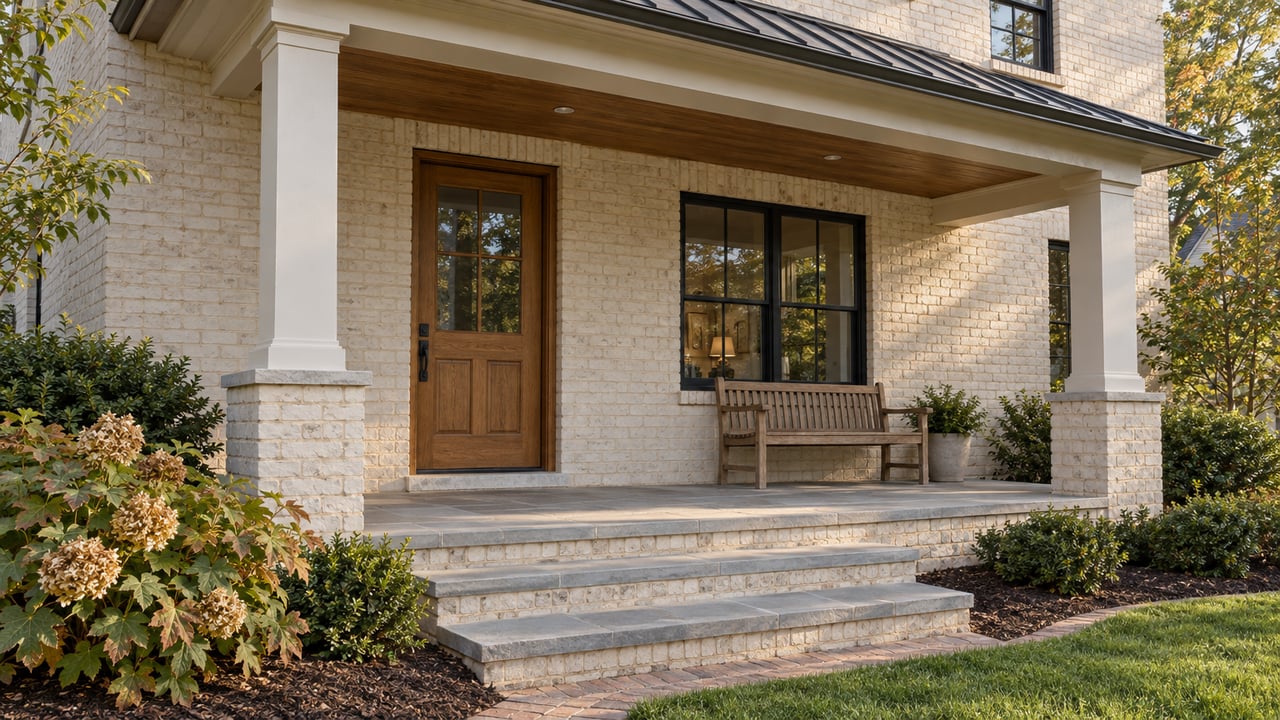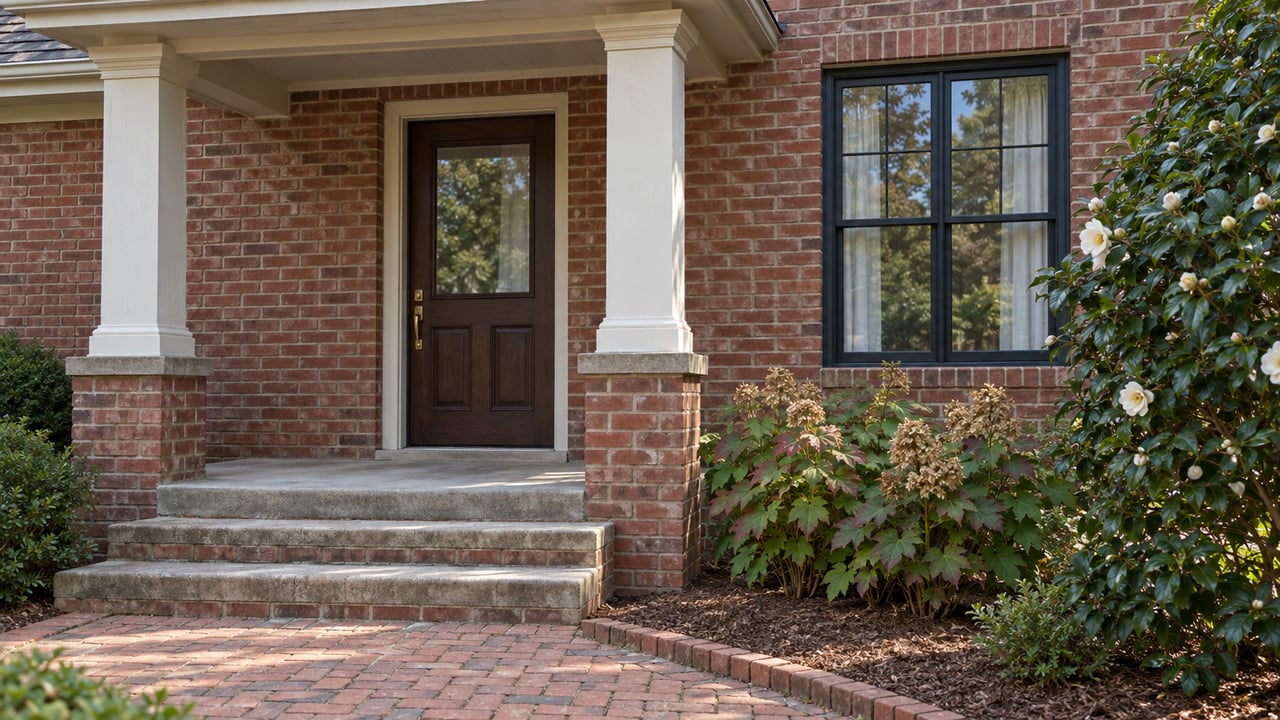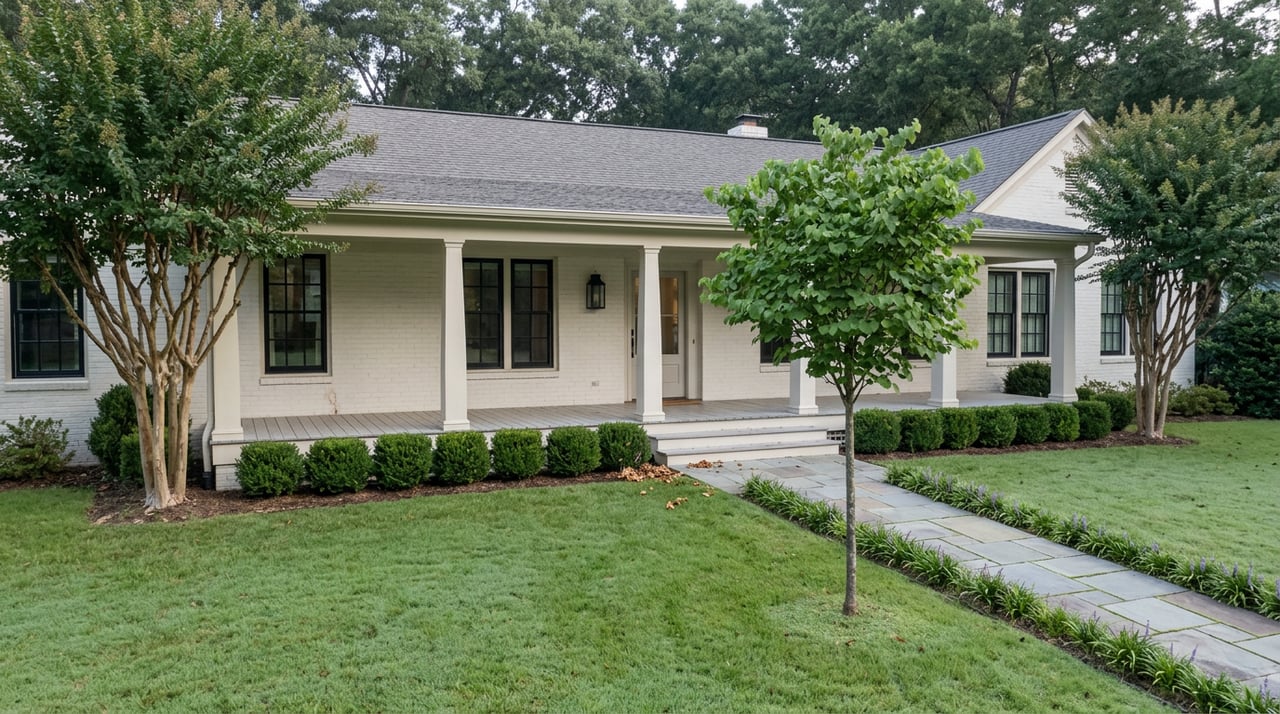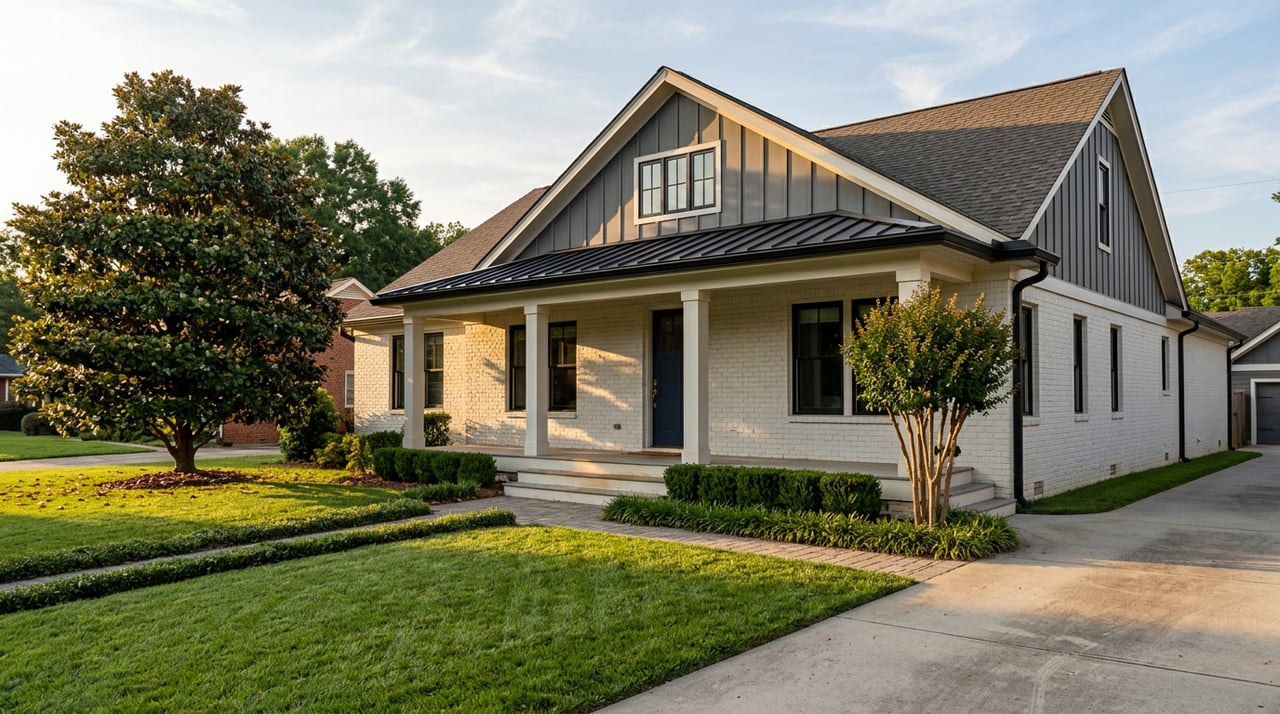
Two homes, one on each side of the Lancaster-York county line, same square footage, same builder floor plan, same finish package. Pull them up on any portal and the list prices sit within a few thousand dollars of each other. Sign the closing papers and one buyer writes a check that is almost thirty thousand dollars larger than the other. The median tells you nothing about which buyer is which.
That is the story of the SC side of the Charlotte line in 2026. Indian Land and Fort Mill medians have converged. The mechanisms behind them have not.
The Number the Median Hides
The headline first. As of spring 2026, Indian Land and Fort Mill medians both sit around $500,000 to $535,000, and the Fort Mill median sale price was about $523,000 over the three months ending April 2026, down 1.7% year over year, with homes averaging 47 days on market. Prices have functionally met in the middle.
Now the number underneath. At its April 7, 2025 meeting, the York County Council gave final approval to an ordinance establishing new public education impact fees for all new residential development within the Fort Mill School District. The ordinance sets the impact fee at $29,640 per single-family detached home and $20,796 per multifamily unit, making it one of the highest school impact fees in the state. The fee schedule is public on York County's site.
That fee applies inside the Fort Mill School District boundary. It does not apply in Indian Land. The mathematical result is that a new build in Fort Mill costs nearly $30,000 more than the identical house would across the line in Lancaster County or Mecklenburg County. Builders do not eat that fee. They fold it into base price.
| Line item on a new build | Fort Mill (York Co.) | Indian Land (Lancaster Co.) |
|---|---|---|
| Single-family school impact fee | $29,640 | None |
| Multifamily/townhome impact fee | $20,796 per unit | None |
| 2025 4% owner-occupied millage (representative) | 237.2 mills (Town of Fort Mill) | 162.2 mills (Lancaster County residential) |
| School operating millage on primary residence | Exempt under SC law | Exempt under SC law |
| Median sale price, spring 2026 | ~$523K | ~$500K to $535K |
Two of those rows come from local millage sheets that list a Town of Fort Mill 4% owner-occupied millage rate of 237.2 mills for 2025 and a Lancaster County 4% owner-occupied millage rate of 162.2 mills for residential property in the county system. That is the practical form of the "SC advantage" people talk about at a dinner party, made specific to the two zip codes actually in play.
Why New Construction Is the Real Fault Line
Resale buyers do not pay impact fees. A well-kept 2015 build in Massey trades on schools, condition, and lot, and the closing math looks similar on either side of the county line. The gap opens up the moment a buyer walks into a builder sales trailer.
If you are weighing a new build against a resale, remember the impact fee. A resale home in Massey carries no fee; the new build down the road has $29,640 baked in. That does not make new construction wrong, but it shifts the value equation toward well-kept resales in a way most national builder sales offices will not volunteer.
For a family who has already decided on new construction, the honest question is what the fee bought. That money built Flint Hill Elementary outright and is helping fund the next middle school, so the fee is doing exactly what it was designed to do. The fees have raised more than $73 million for school construction since 2018. That is a real answer for a buyer prioritizing the Fort Mill district. It is a real reason to look at Lancaster County for a buyer who is not.
The Moratorium That Reshaped the Pipeline
There is a second policy move most portal listings do not surface. One week before those fees took effect, the town council imposed a moratorium on most new residential rezoning applications, in place through the end of 2025 and tied to the town's Our Path Forward 2045 comprehensive planning process. It did not stop projects already approved or land already zoned residential, but it froze the pipeline of new conversions. South Carolina Public Radio covered the timing.
Read that as a supply signal. Fort Mill's future inventory is deliberately constrained. Indian Land's is not. That is one reason both markets have shown solid appreciation, with Indian Land running slightly hotter at 6-8% annually thanks to its rapid growth trajectory. A buyer who plans to stay ten years is buying into two different supply curves, not two different price points.
The Corridor Story Behind the Growth
Indian Land is not just cheaper on new construction. It is where the retail investment has landed. The anchor event was Costco's grand opening on October 31, 2025 at 8800 Charlotte Highway, the centerpiece of Crosland Southeast's Exchange at Indian Land, a 130-acre retail and residential development. Before that date, the nearest Costco for Indian Land and Fort Mill shoppers was approximately ten miles north, across the state line in Charlotte. Now it is five minutes down 521. Eight days earlier, on October 9, Lowes Foods opened at 2230 Daisy Lane inside the same Exchange development. The store is not a standard grocery box. It includes a Beer Den with rotating craft taps and growler fills, a Boxcar Coffee counter, a Cakery with scratch-frosted square cakes, and a Cheese Shop with specialty selections.
More is on the way. King of Fire, the Charlotte-based wood-fired pizza brand, has signed for a 3,484-square-foot space at CrossRidge Center with a summer 2026 opening target. This will be the second brick-and-mortar location for the brand, which launched as a food truck in 2018, opened its first restaurant in Uptown Charlotte, and now runs a fleet of seven wood-fired trucks. At ParkStone at Indian Land, Texas Roadhouse is planned for an outparcel at the corner of US-521 and Shelley Mullis Road, anchoring the north end of a strip that also includes Hot Worx, BBQ Chicken, Smoothie King, and Piedmont Medical Center. The largest single announcement is The Point, a 44-acre mixed-use development set to break ground summer 2026.
The friction is honest and worth naming. Lancaster County Administrator Dennis Marstall confirmed that road projects were underway, including added traffic lights and turn lanes, and said he expected residents to see improvement once school-year traffic normalized and construction wrapped. That was August 2025. Whether the improvement has arrived depends on which stretch of 521 you use and what time you leave the house. The honest version of this post has to include that sentence. The corridor is growing fast, and fast growth on a two-lane highway has a cost that no ribbon-cutting event covers.
What This Changes at the Closing Table
Three specific frictions catch relocating buyers off guard on either side of the line.
The 4% versus 6% assessment ratio. South Carolina assesses owner-occupied primary residences at a 4 percent assessment ratio, while non-owner-occupied properties are assessed at 6 percent. The practical effect is that homeowners who file the legal residence application with the county pay materially less in property tax than a buyer who fails to file or owns the property as an investment. Check your county tax estimate based on the 4 percent rate, not the 6 percent rate that often shows up on the listing detail page. Make sure to file the legal residence application after closing. A lot of buyers pay the higher rate in their first year because no one walked them through the paperwork.
Address versus mailing address. A Fort Mill mailing address does not guarantee a Fort Mill School District parcel. Confirm the parcel actually sits inside the district boundary, not just behind a Fort Mill mailing address; the county GIS map settles it in seconds. Second, call the district enrollment office and ask two questions: which schools does this address feed today, and are any of them frozen or flagged for rezoning as new campuses open?
HOA math beats county math on any given street. A $400 difference in annual dues can outweigh the county tax difference entirely. Two homes with the same list price and different HOAs can end up thousands apart on annual carrying cost, and no portal filter surfaces that until you request the resale certificate.
How the Two Neighborhoods Compare on Structure, Not Just Price
- Governance. Indian Land does not even have its own incorporated town government. It is part of unincorporated Lancaster County, which is part of the appeal for some buyers and part of the friction for others.
- Commute direction. Indian Land is closer to Ballantyne. The Highway 521 corridor runs directly into the Ballantyne business district. Fort Mill is further south and west, and the natural commute path runs up I-77 toward uptown Charlotte rather than across to Ballantyne.
- Utilities. Inside town limits, the Town of Fort Mill runs its own water and sewer utility. Indian Land is served by the Lancaster County Water and Sewer District. Comporium, the regional provider headquartered in nearby Rock Hill, is the dominant fiber and cable carrier on both sides.
- New capacity. Flint Hill Elementary opened in August 2025 as the twelfth elementary school. Flint Hill Middle School is under construction, and the March 2024 bond referendum funds an additional middle school, an early childhood development center, and land for future campuses.
If you are shopping the two markets side by side, the neighborhood overview pages for Fort Mill and Lancaster are a reasonable starting point, but the specific parcel is where the answer lives.
FAQ
Does the $29,640 fee apply to every home in Fort Mill? It applies to new residential construction inside the Fort Mill School District boundary, which includes parts of Tega Cay. On July 1, new single-family homes built within the Fort Mill School District, which includes parts of Tega Cay, will see impact fees of $29,640 per unit tacked onto construction costs. New multi-family units built in Fort Mill after July 1 will see an additional $20,796 added to construction costs. Resales, and new construction outside the district, are not charged the fee.
Are Indian Land schools a step down from Fort Mill? They are different, and the gap has narrowed. Fort Mill School District is ranked number one in South Carolina by Niche for 2026, with Fort Mill High School at 10 out of 10 on GreatSchools. Indian Land's schools rate 7 to 8 out of 10 and rank in the top tier statewide for test score growth. Fort Mill leads today; Indian Land is closing the gap.
What is the practical property tax difference on a $500,000 home? On a $450,000 home, Mecklenburg comes in around $4,725 a year and York County SC around $2,340 a year, with annual savings of $2,000 to $2,500 common. Between York and Lancaster, the county-to-county gap is smaller, typically a few hundred dollars a year on a comparable home, with the millage differential doing most of the work.
The Move From Here
If you already know which side of the line you want, the next step is a parcel-level pass through taxes, HOA, school assignment, and, for a new build, the actual impact fee line item on the builder's cost sheet. If you are still weighing the two markets, the honest answer usually comes out of one afternoon in the car with someone who works both counties every week.
That is the work Timothy Garland Group does across the Rock Hill, Fort Mill, Indian Land, and Greater Charlotte corridor. When you are ready to put real numbers next to real addresses, get a free home valuation or reach out through the contact page and we will walk the line with you.