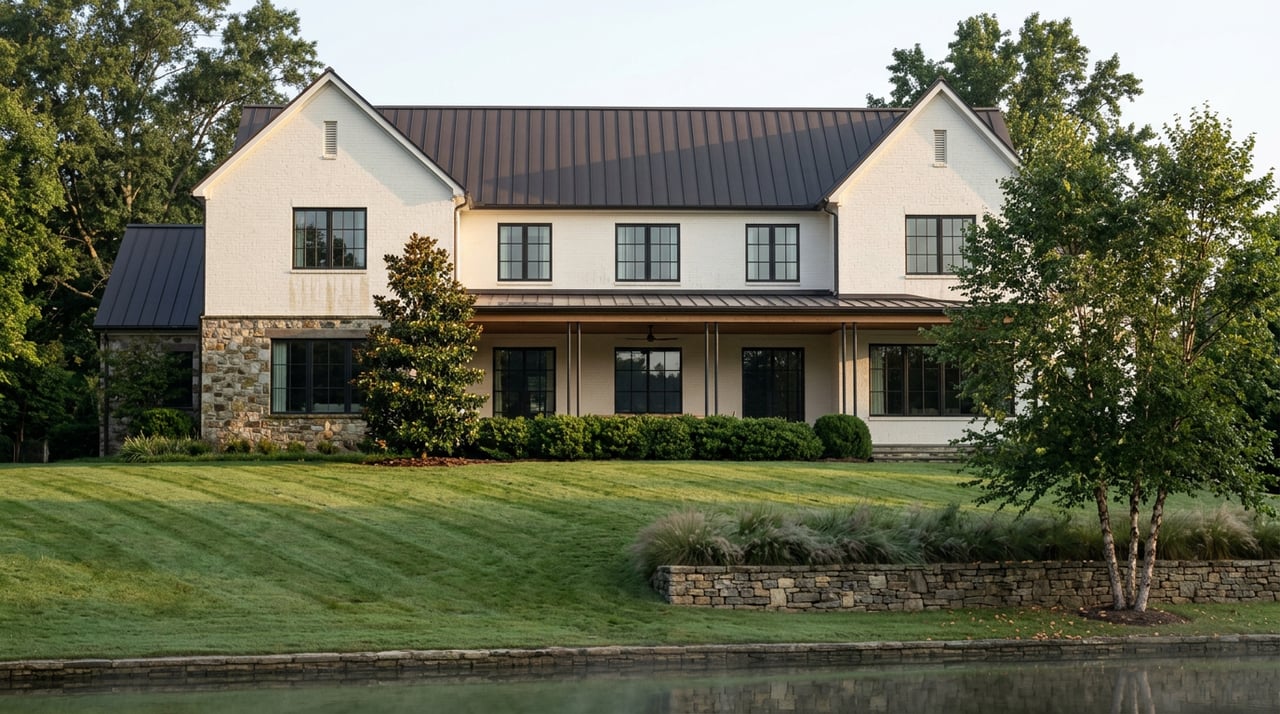
A "waterfront" tag on a Lake Wylie listing tells you where the lot sits. It does not tell you whether you're allowed to put a boat behind the house.
That distinction sounds like a technicality until you're forty-five days into a purchase and your closing attorney is waiting on paperwork from an agency that isn't the county, isn't the seller, and doesn't work on your timeline. On Lake Wylie, Duke Energy authorizes docks and processes permit-transfer applications when a property is sold; York County and Gaston County do not issue dock permits, and homeowners associations may impose separate restrictions. That single fact is the reason the real premium buyers pay here isn't for linear footage of shoreline. It's for certainty that the dock behind the house is legally clean.
The permit that doesn't ride along with the deed
Lake Wylie is a reservoir Duke Energy built on the Catawba River, and Duke still owns or controls the lakebed and, in many places, the buffer strip above it. Because the lake falls under a federal operating license, Duke manages a Shoreline Management Plan that dictates where a private dock is allowed at all, and any private structure in the water needs Duke authorization before a builder drives a single piling.
Here's the part that catches buyers off guard: a dock permit does not transfer to a new owner automatically when the house sells. Moving a lake-use permit into a buyer's name requires its own application through Duke's Lake Access Permit System, and submitting that application triggers a physical inspection of the dock. If a previous owner added decking, a boat lift, or extra cribbing that was never permitted, that's usually the moment it surfaces, sitting under a title company's deadline instead of on a leisurely afternoon with no consequences attached.
York County itself does not issue dock permits for Lake Wylie. It can issue an electrical permit for wiring run to a dock, but the structure itself lives entirely in Duke's jurisdiction. On the North Carolina side, in Gaston and Mecklenburg counties, the same rule applies. County government touches the edges. Duke controls the water.
Why July 1, 2026 changed the math for vacant lots
For years, a buyer who wanted certainty before committing to a full build could apply for Duke's dock approval on a vacant waterfront lot, lock in the permit, and then build the house at their own pace. That option closed this summer. Effective July 1, 2026, Duke Energy stopped reviewing private dock applications on any parcel where no home has been constructed, and the policy applies across every lake Duke manages, not just Wylie.
The practical effect: buyers of raw waterfront lots on Lake Wylie can no longer secure dock approval as a standalone step before they build. Dock feasibility and home construction are now tied together in a way they weren't a year ago. If you're eyeing a vacant dockable lot rather than an existing house, that changes the order of operations for your due diligence, and it's a detail that hasn't made it into most of the general "buying on Lake Wylie" guides still circulating online.
What the price gap is actually pricing
Ask three different sources what a Lake Wylie waterfront home costs and you'll get three different bands, which is itself a clue. As of April 2026, one broad estimate put non-waterfront homes inside Lake Wylie communities at $300,000 to $550,000, lake-access homes with a deeded slip or community dock at $450,000 to $800,000, and true direct waterfront at $700,000 to $2 million and up, with custom estates running $1.5 million to $4 million or more. A separate guide published that same month framed it differently, with waterfront starting around $625,000 for a lot without a private dock and climbing to $925,000 to $2.4 million once a legally attached private dock is part of the package.
The numbers don't line up cleanly, and they don't need to. What both sources agree on is the actual pivot point: the jump doesn't happen at the water's edge, it happens at the presence of a dock that's confirmed, permitted, and transferable. A home with lake frontage but no legal dock rights prices closer to the lower band. A home where the dock has a clean Duke Energy file prices at the top. The "waterfront" label on a listing sheet blurs that line. Your due diligence period is where you find out which side of it a given house actually sits on.
| Price band (as of April 2026) | What it typically includes |
|---|---|
| $300,000 to $550,000 | Non-waterfront home within a Lake Wylie community, no dock rights |
| $450,000 to $800,000 | Lake access via community dock or deeded slip, no private structure |
| $625,000 to $925,000+ | Waterfront lot or home, dock status unconfirmed or absent |
| $925,000 to $2.4 million+ | Waterfront home with a legally permitted, transferable private dock |
| $1.5 million to $4 million+ | Custom waterfront estates with deep water and confirmed dock rights |
Local tracking of dockable waterfront sales through June 30, 2026 adds another layer. In the first half of the year, 65 dockable waterfront homes and 19 dockable lots closed, both up 36 percent over the same period in 2025. The average price for a dockable lot climbed to roughly $725,000, a 9 percent increase year over year, while the average sale price for a dockable waterfront home landed near $1,575,000, up about 1 percent from a year earlier. Inventory jumped from 57 waterfront homes on the market at the end of May 2026 to 77 by the end of June 2026, though that's still about 40 percent below what was available during a typical pre-pandemic summer. Buyers are paying more for confirmed dock rights specifically because there are fewer of them to go around, not because shoreline itself got scarcer.
The drawdown is doing your inspection for you
This year's drought conditions have pulled Lake Wylie's water level down further than usual heading into late summer, and that drawdown has an unplanned side effect. Cribbing, retaining structures, and decking built out past a dock's original permitted footprint sit underwater at full pond, invisible during a normal showing. At a lower water line, all of that becomes visible.
Across 325 miles of shoreline spanning Gaston and Mecklenburg counties on the North Carolina side and York County on the South Carolina side, that's a lot of structure suddenly easier to see, right as a busy summer of buying and selling is pushing more dock permits into transfer inspections at the same time. If you're under contract on a waterfront home this season, the timing works in your favor only if you use it. Ask to see the dock at current water levels before your due diligence period closes, not after.
What to actually ask for before you write an offer
A few documents turn a dock from a question mark into a known quantity:
- The Duke Energy permit number and a copy of the permit itself, not just a verbal assurance that "it's permitted"
- Any prior Duke Energy approvals, inspection records, or correspondence about compliance
- A recent survey showing the shoreline, dock location, and the parcel's relationship to Lake Wylie's full pond elevation of 569.4 feet, which is the baseline Duke uses for permitting
- Confirmation of which side of the state line and which county the parcel sits in, since York County, Gaston County, and Mecklenburg County each layer their own building and zoning rules on top of Duke's authority
- HOA architectural guidelines if the home sits inside a gated community, since some communities restrict dock size, materials, or allow only shared slips
None of this means a waterfront purchase on Lake Wylie is a gamble. It means the dock is its own asset with its own paper trail, separate from the home inspection, and the buyers who move fastest through closing are the ones who start that paper trail early instead of assuming a dock pictured in the listing photos comes with a clean file attached.
A few questions that come up often
Does York County or Gaston County issue dock permits on Lake Wylie? No. Both counties can issue related permits, such as electrical work, but the dock structure itself is authorized only through Duke Energy's Shoreline Management Plan.
What changed on July 1, 2026? Duke Energy stopped reviewing new private dock applications on vacant lots where no home has been built, across all the lakes it manages. Dock approval and home construction are now linked for anyone buying raw waterfront land.
Does an existing dock permit transfer automatically when I buy the house? No. The buyer has to submit a separate transfer application through Duke's Lake Access Permit System, which typically triggers a physical inspection before the permit moves into the new owner's name.
If you're weighing a Lake Wylie purchase against other spots in the Rock Hill to Charlotte corridor, or you already have a waterfront property and want a clear read on what the current market actually supports, the Timothy Garland Group team works this exact stretch of York County and can walk the dock paperwork with you before you're locked into a closing date. Start with our buyer's guide or reach out directly, and if you're on the selling side of a Lake Wylie dock, a home valuation is a useful first step to see where your property actually lands once the permit history is accounted for.
This article is general information, not legal, tax or financial advice. Consult a qualified professional about your situation.